


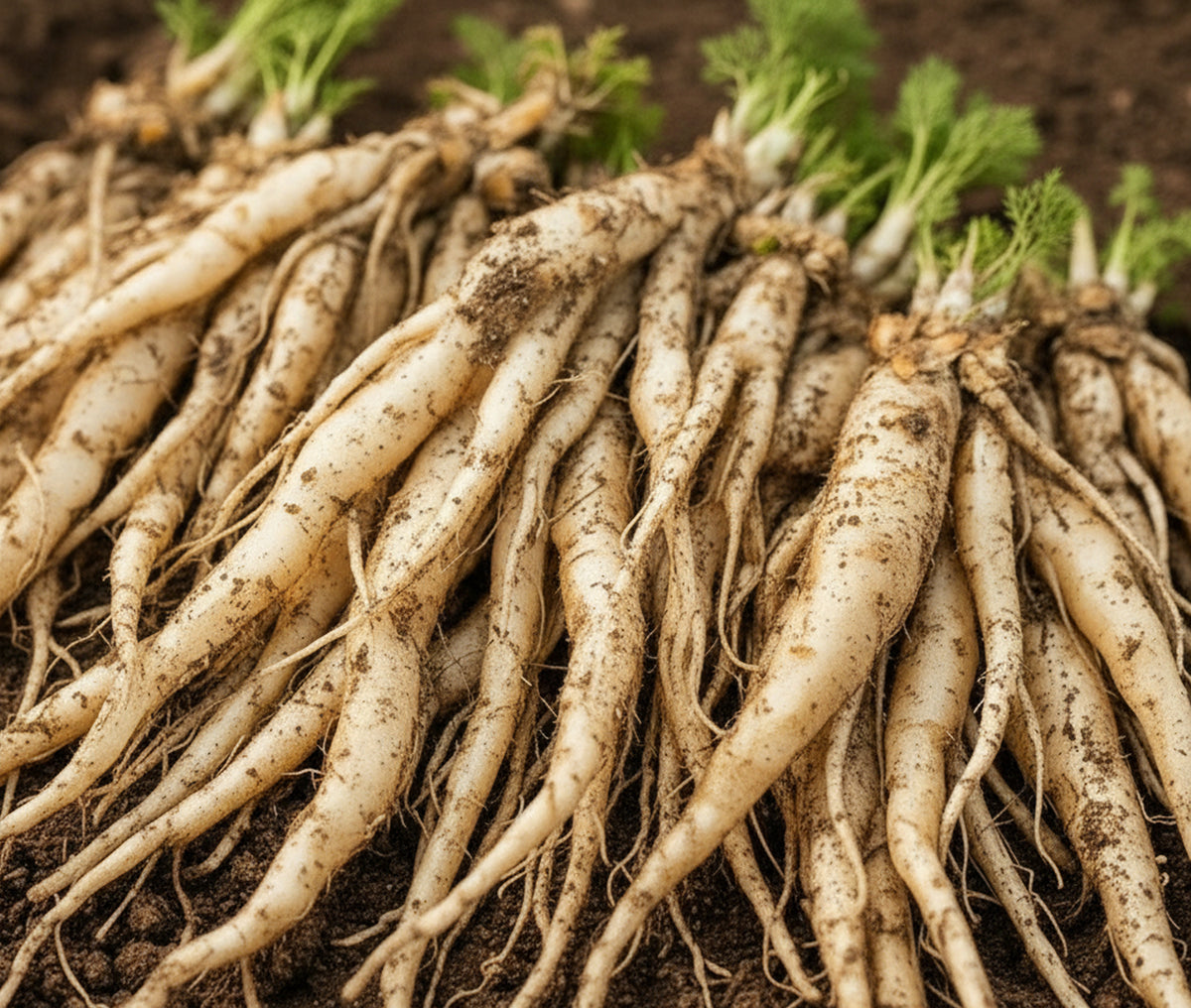
Shatavari
Background
Shatavari (Asparagus racemosus) is a climbing plant native to India, the Himalayas, and parts of Southeast Asia. Revered in Ayurveda for thousands of years, its name translates to "she who possesses one hundred husbands," reflecting its long-standing reputation as a botanical that supports women's vitality and reproductive wellness. The root is the primary part used in herbal preparations and contains a variety of naturally occurring compounds, including steroidal saponins (known as shatavarins), flavonoids, polyphenols, and antioxidants.
Today, Shatavari is one of the most widely used herbs in Ayurvedic medicine for supporting women's health throughout various stages of life. It is also studied for its role in promoting healthy stress responses, immune function, and digestive wellness.
Traditional Uses
In Ayurveda, Shatavari is considered a nourishing, rejuvenating herb (Rasayana) traditionally used to support female reproductive health, hormonal balance, and overall vitality. Herbal practitioners have long recommended Shatavari to promote menstrual comfort, support fertility, encourage healthy lactation, and ease the transition through menopause.
Beyond women's health, Shatavari has traditionally been used to support healthy digestion, soothe the gastrointestinal tract, promote immune function, and help the body adapt to physical and emotional stress. Its broad range of traditional uses has made it one of Ayurveda's most respected herbs for promoting long-term wellness.
What Does Science Tell Us?
Modern research suggests that Shatavari supports health through its unique combination of steroidal saponins, flavonoids, and antioxidant compounds. These naturally occurring phytochemicals help protect cells from oxidative stress while supporting healthy inflammatory responses throughout the body.
Shatavari is best known for its role in women's health. Clinical and preclinical studies suggest it may help support hormonal balance, menstrual comfort, and reproductive wellness. Researchers believe many of these effects are related to the herb's naturally occurring steroidal saponins, which may interact with pathways involved in female reproductive health.
Emerging clinical research has also investigated Shatavari for supporting women during menopause. Studies suggest supplementation may help promote comfort during the menopausal transition and support overall quality of life, although additional large-scale clinical trials are needed to confirm these findings.
In addition to reproductive wellness, research indicates that Shatavari may support healthy stress responses through its adaptogenic properties. Laboratory studies have also demonstrated antioxidant, immune-supporting, and gastrointestinal protective effects, suggesting benefits that extend beyond women's health.
Overall, current evidence supports Shatavari as a traditional adaptogenic herb that promotes women's wellness, healthy aging, antioxidant protection, and resilience to everyday stress.
Safety
Shatavari has been used safely in traditional Ayurvedic medicine for centuries and is generally well tolerated when used as directed. Human studies have reported few adverse effects, with occasional mild digestive discomfort or allergic reactions in sensitive individuals.
Because Shatavari belongs to the asparagus family, individuals with known allergies to asparagus may also be sensitive to Shatavari. Individuals who are pregnant, nursing, taking medications, or managing a medical condition should consult a healthcare professional before beginning supplementation.
References
- Alok S, Jain SK, Verma A, Kumar M, Mahor A, Sabharwal M. Plant profile, phytochemistry and pharmacology of Asparagus racemosus (Shatavari): A review. Asian Pacific Journal of Tropical Disease. 2013;3(3):242-251.
- Goyal RK, Singh J, Lal H. Asparagus racemosus—An update. Indian Journal of Medical Sciences. 2003;57(9):408-414.
- Thakur M, Dixit VK. Effect of Asparagus racemosus on reproductive and hormonal health: A review of traditional uses and modern evidence. Journal of Ethnopharmacology.