


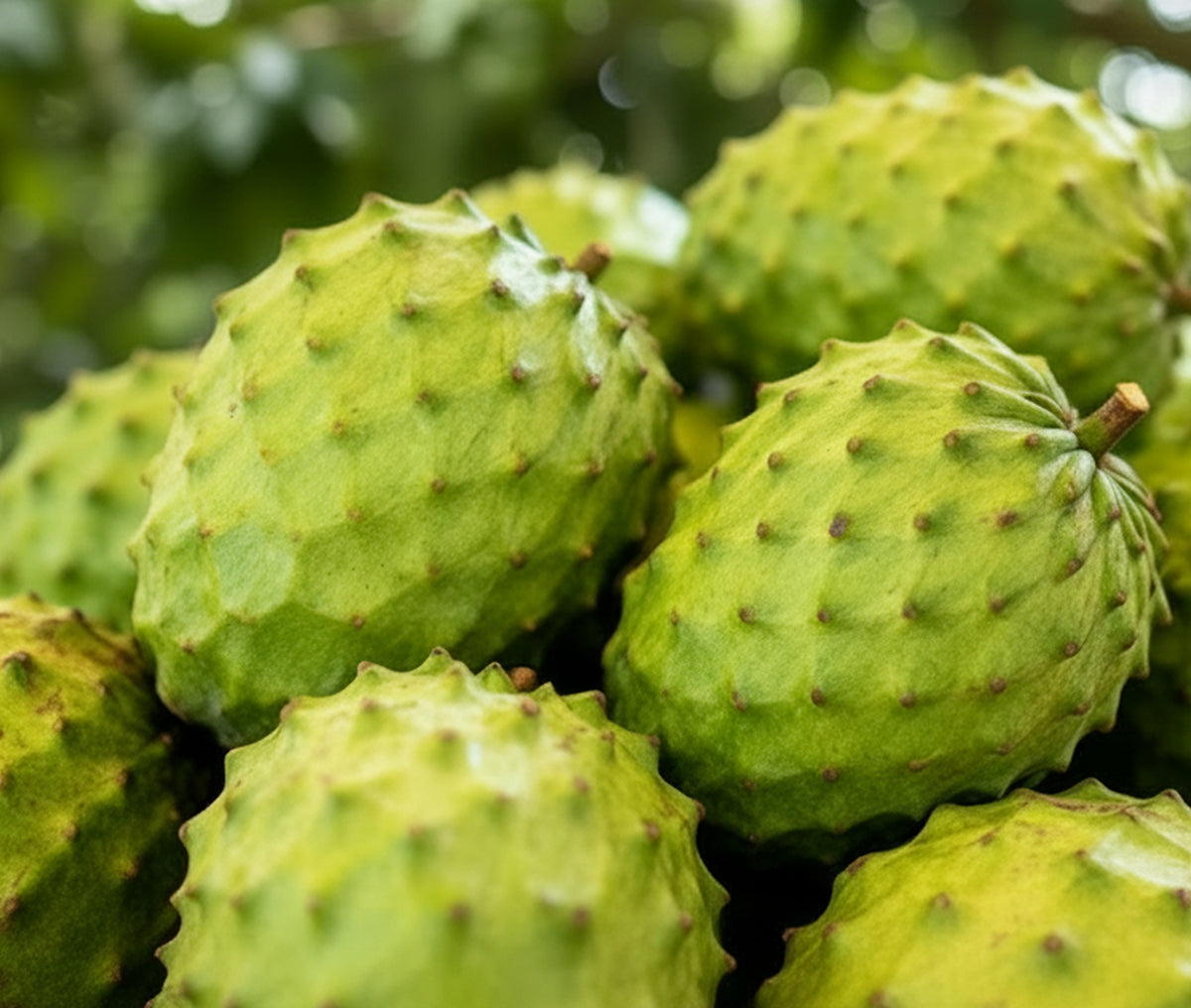
Soursop
Background
Soursop (Annona muricata), also known as graviola or guanabana, is a tropical evergreen tree native to the Americas and now cultivated throughout tropical regions of the world. Its distinctive green fruit is widely consumed as a food, while its leaves, bark, roots, and seeds have a long history of use in traditional herbal practices.
Soursop contains a diverse range of naturally occurring plant compounds, including flavonoids, phenolic compounds, alkaloids, and a group of compounds known as annonaceous acetogenins. These phytochemicals have generated scientific interest in the plant's antioxidant properties and its potential to support healthy cellular and metabolic function.
Traditional Uses
Soursop has been used for generations in traditional wellness practices throughout the Caribbean, Central and South America, Africa, and Southeast Asia. The fruit has traditionally been enjoyed as a nourishing food, while preparations made from the leaves have been used to promote relaxation, digestive comfort, and general well-being.
Traditional herbalists have also used different parts of the plant to support immune health, maintain a healthy inflammatory response, and promote digestive and intestinal wellness. Today, soursop leaf preparations continue to be used in teas and dietary supplements for antioxidant and general wellness support.
What Does Science Tell Us?
Soursop contains numerous phytochemicals that have demonstrated antioxidant activity in laboratory and preclinical research. Flavonoids and other phenolic compounds may help neutralize free radicals and protect cells from oxidative stress, providing one potential explanation for some of the plant's traditional wellness applications.
Researchers have paid particular attention to annonaceous acetogenins, naturally occurring compounds found in several parts of the plant. Laboratory studies show that these compounds can influence mitochondrial energy processes and other aspects of cellular function. Soursop extracts have also demonstrated antimicrobial and healthy inflammatory-response activity in experimental models.
Soursop is sometimes promoted for more significant health applications, including claims related to cancer. While laboratory studies have shown that certain soursop compounds can affect cancer cells under experimental conditions, there is currently insufficient human clinical evidence to establish soursop as a treatment or preventive measure for cancer or other diseases.
Human research on soursop supplementation remains limited compared with the extensive laboratory and traditional-use literature. Overall, current evidence is most appropriate for supporting soursop's role as a source of antioxidant phytochemicals, while additional clinical research is needed to establish its broader benefits in humans.
Safety
Soursop fruit is widely consumed as a food, but the safety of concentrated extracts and long-term supplemental use requires greater caution. Different parts of the plant contain varying concentrations of annonaceous acetogenins, including annonacin.
Laboratory and observational research has raised concerns about excessive or prolonged exposure to annonacin because of its potential neurotoxic effects. For this reason, concentrated soursop preparations should be used according to product directions, and prolonged or excessive supplementation should be avoided unless supervised by a qualified healthcare professional.
Soursop may also influence blood pressure and blood sugar. Individuals taking medications for either should consult a healthcare professional before supplementation. The seeds should not be consumed.
Individuals who are pregnant, nursing, taking medications, or managing a medical condition should consult a qualified healthcare provider before using soursop supplements.
References
- Coria-Téllez AV, Montalvo-Gónzalez E, Yahia EM, Obledo-Vázquez EN. Annona muricata: A comprehensive review on its traditional medicinal uses, phytochemicals, pharmacological activities, mechanisms of action and toxicity. Arabian Journal of Chemistry. 2018;11(5):662-691.
- Moghadamtousi SZ, Fadaeinasab M, Nikzad S, Mohan G, Ali HM, Kadir HA. Annona muricata (Annonaceae): A review of its traditional uses, isolated acetogenins and biological activities. International Journal of Molecular Sciences. 2015;16(7):15625-15658.
- Bonneau N, Baloul L, Bajin ba Ndob I, et al. The fruit of Annona muricata L. as a source of environmental neurotoxins: From quantification of annonacin to human exposure. Toxins. 2022;14(8):520.